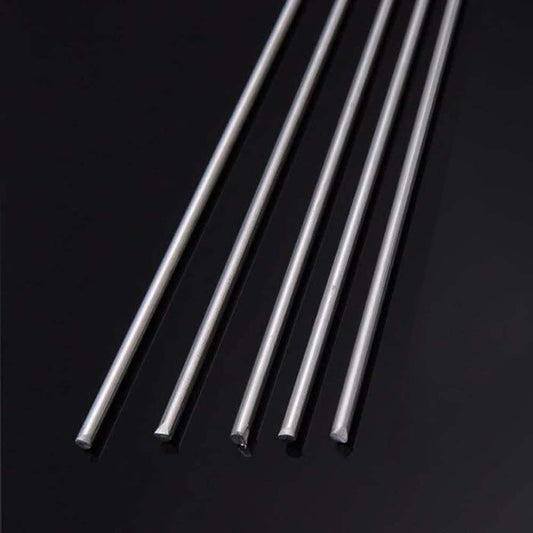
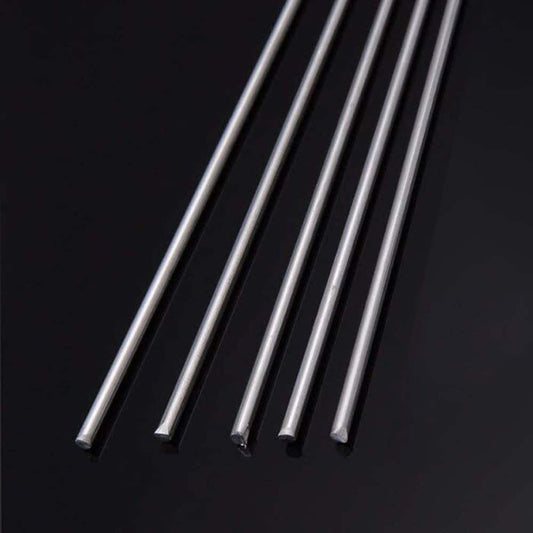
Collection: Low Temperature Silver Solder
Our low temperature cadmium-free silver solder range is designed for precision joining where heat control is critical. These alloys provide excellent flow characteristics and reliable joint strength while minimising the risk of distortion or damage to heat-sensitive components.
Manufactured without cadmium, they offer a safer, environmentally responsible alternative to traditional silver solders — without compromising performance. Ideal for applications such as model engineering, refrigeration, HVAC, jewellery making, and general metalwork, our low temperature alloys ensure clean, smooth joints and consistent results.
-
1 Metre 455 Silver Solder Wire
Regular price From £12.80 GBPRegular priceSale price From £12.80 GBP -
455 Silver Solder Foil 150 x 20 x 0.1mm
Regular price £18.96 GBPRegular priceSale price £18.96 GBP -
455 Silver Solder Paste (10g Syringe)
Regular price £35.00 GBPRegular priceSale price £35.00 GBP -
455 Silver Solder Rod 0.7mm dia x 500mm
Regular price £31.00 GBPRegular priceSale price £31.00 GBP -
455 Silver Solder Rod 1.0mm dia x 500mm
Regular price £54.96 GBPRegular priceSale price £54.96 GBP -
455 Silver Solder Rod 1.5mm dia x 500mm
Regular price From £40.00 GBPRegular priceSale price From £40.00 GBP -
455 Silver Solder Rod 2.0mm dia x 500mm
Regular price From £102.00 GBPRegular priceSale price From £102.00 GBP -
Brazing Starter Pack
Regular price £26.40 GBPRegular priceSale price £26.40 GBP -
Brazing Starter Pack with Handbook
Regular price £45.00 GBPRegular priceSale price £45.00 GBP
What is low temperature silver solder?
Low temperature silver solder is a cadmium-free brazing alloy that flows and bonds at temperatures typically between 630–660°C — lower than standard silver solder grades. This reduced working temperature makes it easier to control heat input, which is particularly valuable when joining components that are close together, delicate, or already partially assembled.
The lower brazing temperature also reduces oxidation and discolouration on the parent metal, meaning less cleaning and finishing work after the joint is made. All alloys in this range conform to ISO 17672 Ag 155, ensuring consistent composition and predictable performance across every batch.
When should you choose a low temperature alloy?
Low temperature silver solder is the right choice when you need to braze near previously soldered joints without disturbing them, when working with thin sections or small parts where heat build-up is a concern, or when you want the most forgiving alloy for hobby and model engineering work.
It is also the preferred grade for jewellery repair and restoration, residential HVAC pipework, and any application where a butane or propane torch is the primary heat source.
If you are new to silver soldering, the 455 grade is typically the best starting point — it flows readily and is the most widely used alloy in model engineering.
Not sure which diameter or form is right for your project? Our Help Me Choose guide walks you through the key decisions, or contact us for free technical advice.
Frequently Asked Questions
Do I need flux with low temperature silver solder?
Yes — flux is essential. It removes surface oxides during heating and allows the molten alloy to flow cleanly into the joint. Without flux, the solder will bead rather than flow, and the joint will be weak or incomplete. Our silver solder fluxes are formulated to be active across the 630–660°C range used by these alloys.
What is the difference between low, medium, and high temperature silver solder?
The three grades differ primarily in their silver content and working temperature. Low temperature alloys (like the 455 grade here) flow at around 630–660°C and are the easiest to use with a standard propane or butane torch. Medium temperature alloys typically operate at 680–750°C and are used where higher joint strength or operating temperature is needed. High temperature alloys exceed 750°C and are chosen for demanding engineering applications. For most hobbyist and model engineering work, low temperature alloys are sufficient.
Can I use low temperature silver solder with a butane torch?
Yes, for small sections. A butane torch can reach the 630–660°C range needed for low temperature alloys, but its heat output is limited, so it works best on small components with good thermal conductivity — such as copper pipe fittings up to about 15mm, or small model engineering parts. For larger sections, a propane or MAPP gas torch will deliver more reliable results. If you are unsure, our Help & Advice section covers torch selection in more detail.
Which diameter rod should I choose?
The 455 alloys in this range are suitable for joining copper, brass, bronze, mild steel, and stainless steel, as well as dissimilar combinations of these metals. They are not suitable for aluminium, zinc, or zinc-based alloys such as die-cast parts. If you are unsure whether your base materials are compatible, contact us before ordering.
What metals can I join with these alloys?
As a general rule, match the rod diameter to the size of the joint. For fine or intricate work — jewellery, small model engineering components — 0.7mm or 1.0mm is recommended. For general pipework and medium-sized joints, 1.5mm is the most commonly used size. The 2.0mm rod is suited to larger gaps or heavier sections where more filler material is needed in a single pass. Wire is also available for applications requiring the solder to be pre-formed or fed into awkward positions.
Why Choose CuP Alloys?
-
Great Value Products
Discover premium-quality silver solder and brazing alloys at competitive prices — exceptional performance and reliability for every budget.
-
Free UK Delivery
Enjoy fast, reliable shipping across the UK mainland with no minimum spend and no hidden delivery charges.
-
Expert Customer Service
Rely on over 60 years of brazing experience — real advice, technical support, and product guidance from industry specialists.
-
Unbeatable Selection
Find everything you need for successful brazing — from silver solder and fluxes to torches and accessories, all in one place.